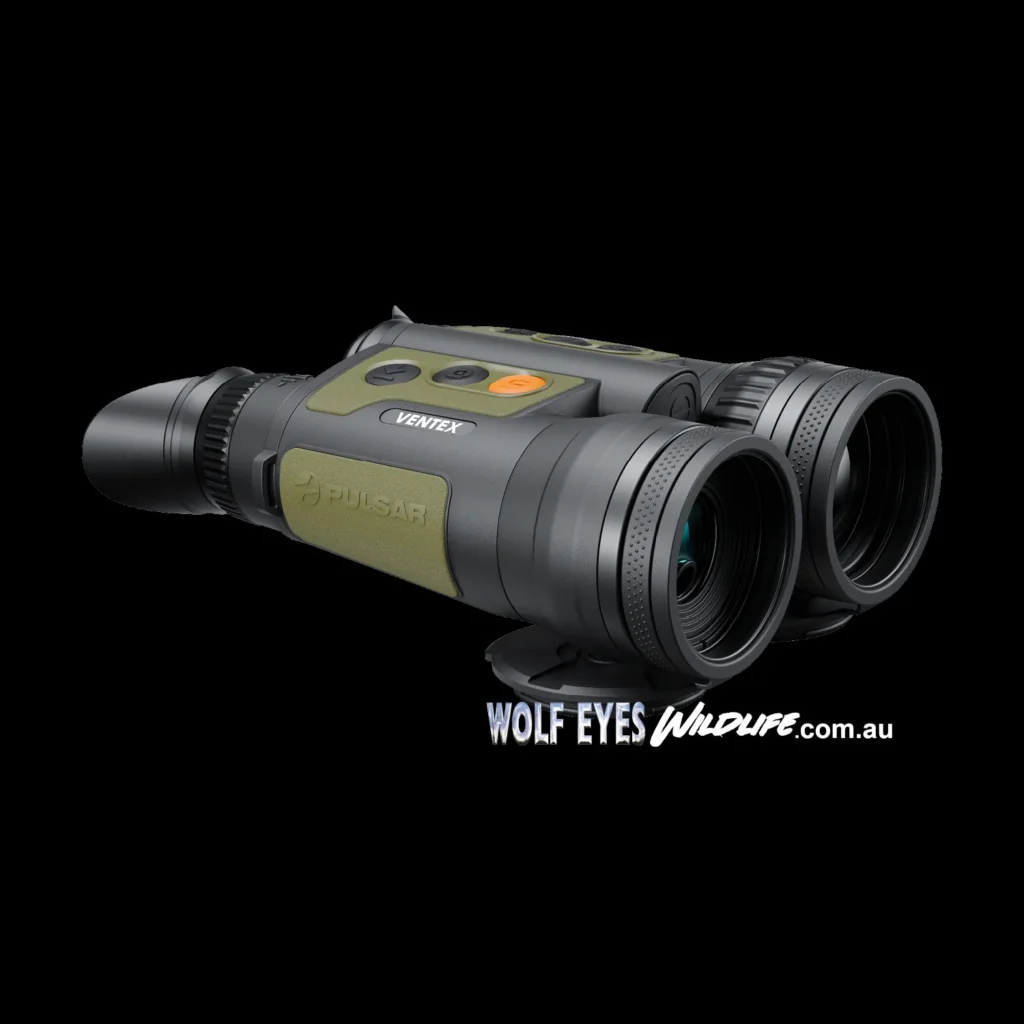
For wildlife enthusiasts who want optimum thermal imaging technology, Pulsar Wildlife Ventex XT50 LRF thermal binoculars sit firmly at the top of the tree delivering exceptional HD resolution imaging. Combined with long-range detection, and the comfort of true binocular viewing, these binoculars are designed for people who spend serious time finding animals in the wild and want the very best equipment at hand.
At the core of Pulsar Wildlife Ventex XT50 LRF thermal binoculars is an impressive 1280 × 1024 HD thermal sensor with a highly sensitive sub-20mK system sensitivity rating. This allows the binoculars to detect extremely subtle temperature differences, producing remarkably detailed thermal images even in difficult conditions such as fog, rain, high humidity, or low thermal contrast environments.
The 50mm F1.0 germanium objective lens and 2x to 16x magnification range provide outstanding flexibility, allowing users to scan large areas before zooming in to identify distant animals in fine detail. Detection distances extend to an impressive 2,300 metres, making the Ventex XT50 LRF equally suited to wide open landscapes and more heavily timbered environments. The exceptionally wide 17.5-degree field of view of Pulsar Wildlife Ventex XT50 LRF thermal binoculars also makes it easier to locate and track moving animals, plus they have a handy tripod socket so the binoculars can be mounted for even smoother scanning over extended periods.
Thanks to the integrated laser rangefinder, Pulsar Wildlife Ventext XT50 thermal binoculars can be used to measure distances out to 1,500 metres with an accuracy of ±1 metre, providing valuable information. Built-in image stabilisation further improves usability when observing distant or moving animals. Additional features include 64GB of onboard storage, photo and video recording with audio, dual-band Wi-Fi connectivity, and compatibility with the Wild Vision app for remote control and media transfer. A magnesium alloy body, IPX7 waterproof rating, and dual battery system delivering up to eight hours of operation ensure the binoculars are ready for demanding field conditions.